
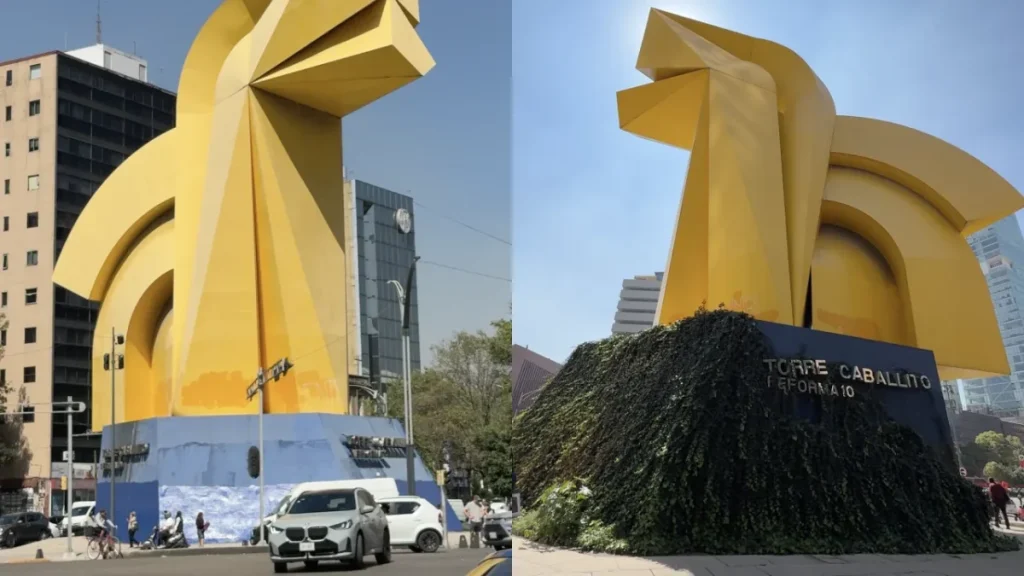

Do you know the story behind the “Caballito” on Paseo de la Reforma? One of Mexico City’s most striking monuments hides a practical function beneath its bright yellow color. Popularly known as the “Caballito,” it is not merely a work of art but a monumental chimney designed to vent gases from the city’s deep sewer system.
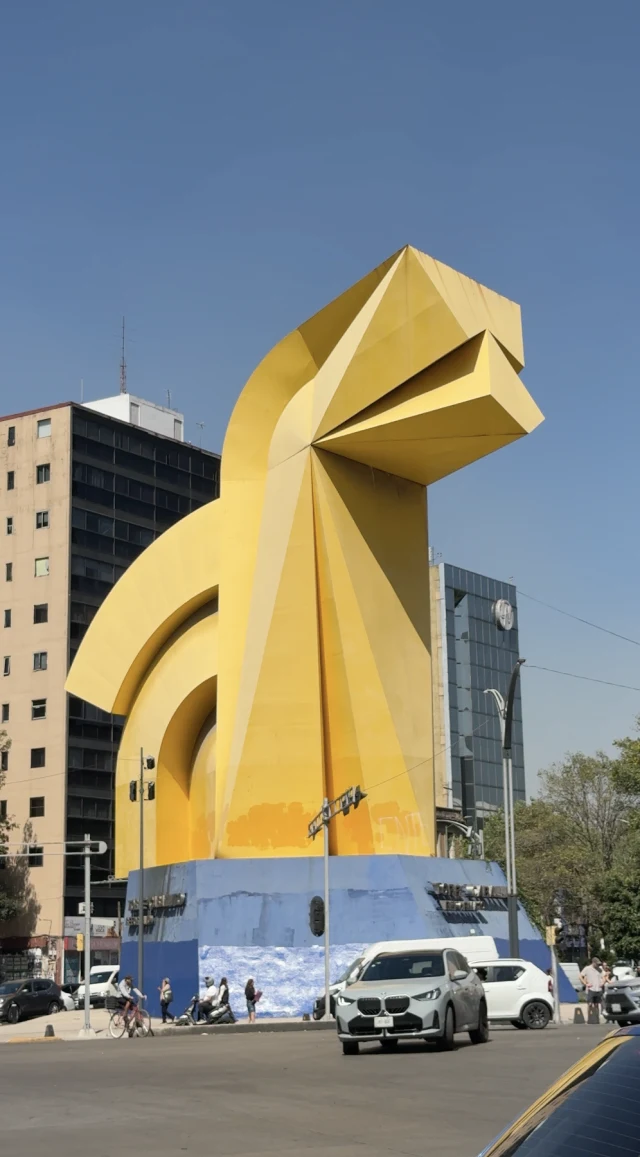
More than three decades ago, sculptor Enrique Carbajal González—known in art circles as Sebastián—was commissioned to design a structure to vent gases from the subsoil. The work was to be placed at the intersection of Reforma and Bucareli Avenue, on the condition that it respect the tradition of that iconic roundabout. The equestrian statue of Charles IV, a historic piece currently on display in front of the MUNAL, originally stood at that very spot.
Discover the history of the Caballito on Reforma: geometry and the creation of a unique color
True to his style focused on abstract sculpture, Sebastián rejected the idea of creating a realistic equestrian figure. The artist’s solution was to reinterpret the concept, giving rise to an enormous geometric head, whose official title is Cabeza de caballo. The forms of this piece draw inspiration from various artistic movements, including the horses of Etruscan art, depictions from ancient Greece, and the Cubism of painter Georges Braque.
Beyond its lines, the structure’s visual impact was no accident. The artist developed a specific shade he called “Caballito yellow.” In an interview with BBVA, the sculptor himself described this intense pigment as a veritable burst of color for anyone who sets their gaze on the monument.
Inaugurated in 1992, the structure stands 28 meters tall and operates continuously, serving both as a ventilation system and a public exhibit. After more than 30 years standing, the piece remains a landmark of the capital, successfully addressing a sanitary engineering need through geometry and art.
