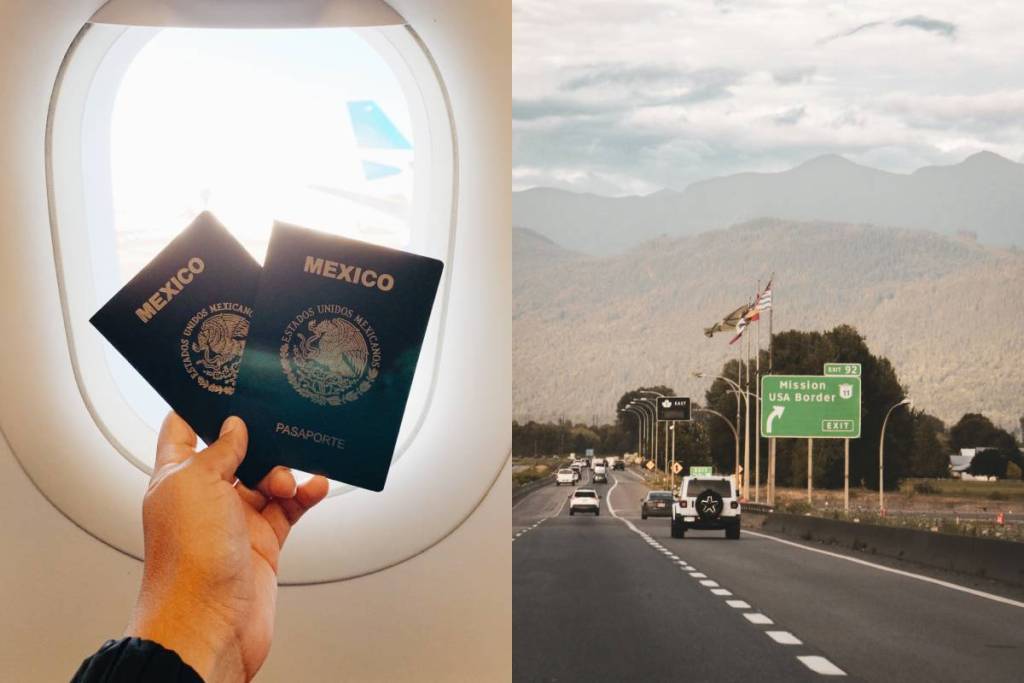

If you have a Mexican passport and travel frequently to the United States, here’s a fact that will likely interest you: under certain conditions, you can enter some border areas of the neighboring country without having to present your passport at every land crossing.
Note: This is not a new immigration measure. This option is available thanks to the Border Crossing Card, officially known as the Border Crossing Card (BCC), DSP-150, or popularly referred to as the “laser visa.”
This document is exclusively for Mexican citizens and functions as a B1/B2 visa. According to U.S. authorities, it can be presented on its own when entering directly from Mexico by land, recreational boat, or ferry.
How can you travel without presenting your Mexican passport?

First, you need to have the Border Crossing Card. To apply for it, you must meet the requirements for a B1/B2 visa, and you do need to have a valid Mexican passport during the application process.
Once issued, the BCC is generally valid for up to 10 years and can be used for temporary visits, such as tourist or business trips.
But there’s one important condition: simply using this card doesn’t mean you can move freely throughout the United States.
The authorized area extends up to 25 miles—about 40 kilometers—from the border in California and Texas. In New Mexico, it extends up to 55 miles—about 88 kilometers—or to Interstate 10, while in Arizona it can reach up to 75 miles, approximately 120 kilometers.
As for the cost, applying for the Border Crossing Card carries an application fee of $185, since this document also functions as a B1/B2 visa. Keep in mind that paying the application fee does not guarantee that the visa will be approved.
What if you want to travel farther?
If you plan to leave these border areas, additional immigration requirements may apply, including obtaining an I-94 form. Additionally, to enter by plane, you must have the documents required for that type of travel.
And one last point: having a Mexican passport, visa, or Border Crossing Card does not automatically guarantee entry. As with any entry into the United States, the final decision on admission rests with immigration authorities at the port of entry.