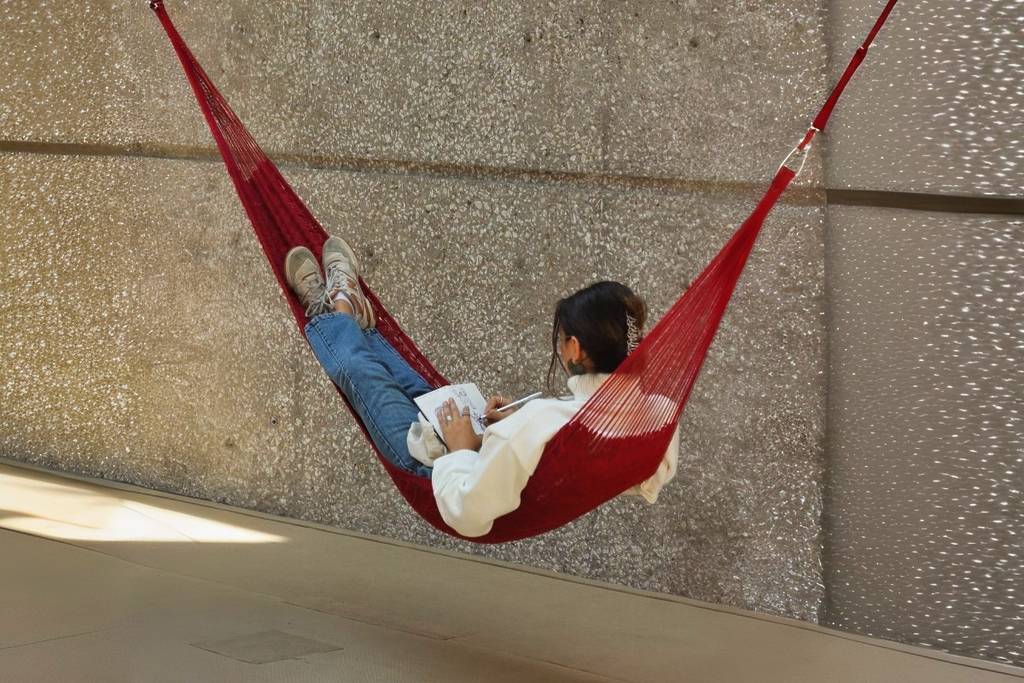

If art that you experience with your body—and not just look at—is your thing, you have to head to the Tamayo Museum. Within its new exhibition Wayamou: Languages of the Common, there is an installation that is drawing attention for a very simple reason: you can lie down in it.
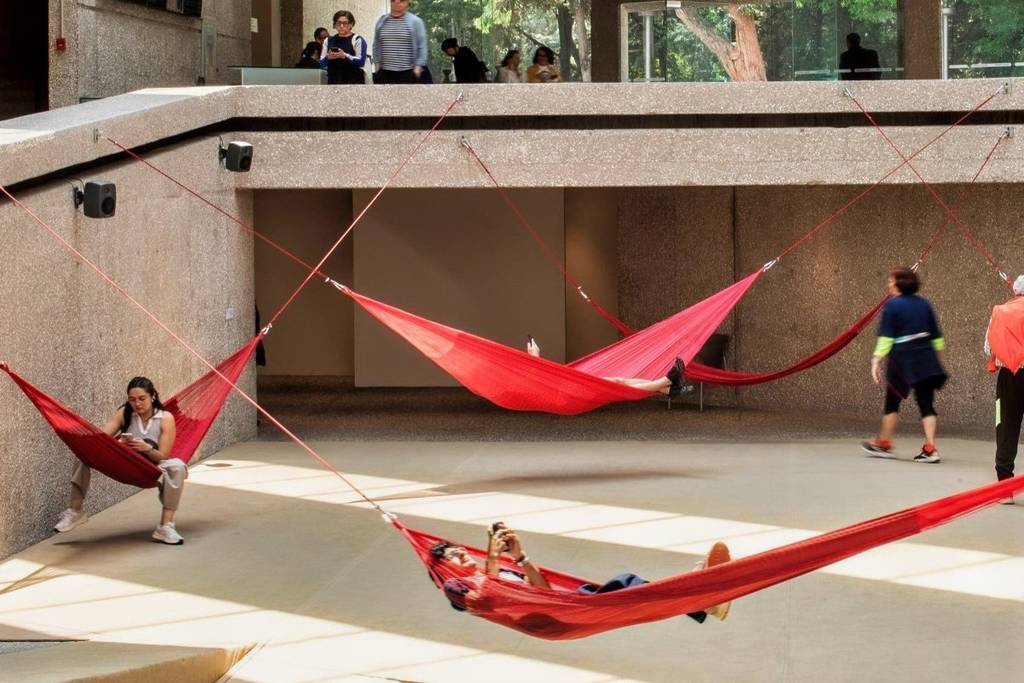
It is “Mɨ Thari,” a work by Mexican artist Laura Anderson Barbata that transforms the museum’s central courtyard into a space for rest, contemplation, and connection. Yes, there are hammocks… and yes, they are there to be used.
An installation to experience, not just to see
Far from being a mere decorative element, the hammocks are designed as a physical experience. You can lie down, slow your pace, and let yourself be enveloped by the atmosphere. For Anderson Barbata, the body is an essential way to connect with art and with others.
The piece also includes a soundscape featuring jungle sounds, as well as the voice of Yanomami artist Sheroanawe Hakihiiwe. All of this creates an atmosphere that transports you out of the city, almost as if you were entering another ecosystem.
But there’s more to it: the artist suggests that this act of rest also has a political dimension. Stopping, reflecting, and sharing the space with others becomes a form of resistance and community.
The context: Wayamou and the dialogue between cultures
“Mɨ Thari” is part of Wayamou: Languages of the Common, an exhibition that brings together the work of Anderson Barbata and Hakihiiwe. Both artists explore themes such as spirituality, nature, and ancestral knowledge.
The exhibition’s title refers to a ceremonial dialogue from Yanomami culture that seeks to resolve conflicts and maintain peace. Based on this idea, the exhibition proposes an exchange of knowledge and experiences as the foundation for coexisting in today’s world.
📅 Through May 10, 2026
📍 Museo Tamayo, Chapultepec Forest, Mexico City
⏰ Tuesday through Sunday, 10:00 a.m. to 6:00 p.m.
🎟️ General admission $90; free admission on Sundays
This is one of those experiences that breaks with the traditional idea of a museum. Here, you don’t just see art: you inhabit it, you feel it… and you can even take a nap if you want.