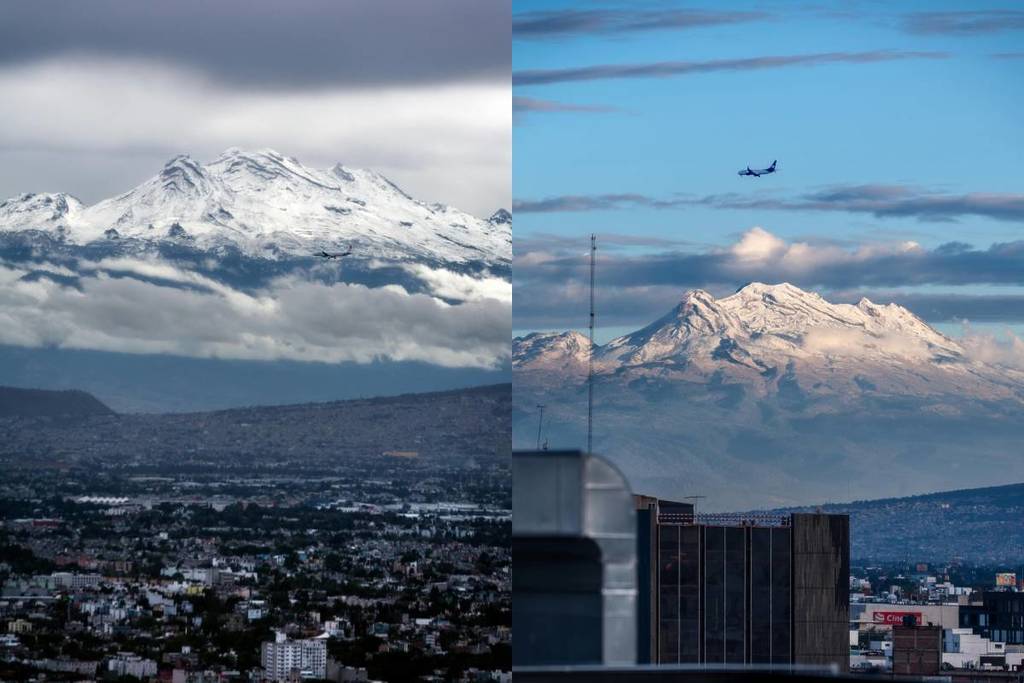

For decades, the snow-capped peaks of Iztaccíhuatl, Popocatépetl, and Pico de Orizaba were part of Mexico’s most impressive natural landscape. On clear days, it was still possible to admire the white silhouette of “La Mujer Dormida” from Mexico City. However, that ice, which seemed eternal, is rapidly disappearing.
According to specialists at UNAM, Mexico could lose its last glaciers in the coming years due to rising temperatures caused by climate change.
About 60 years ago, there were permanent glaciers on the country’s three highest mountains. Iztaccíhuatl once had 12 glaciers, Popocatépetl had 3, and Pico de Orizaba had 9. Today, only small fragments of ice remain on Iztaccíhuatl and Citlaltépetl, better known as Pico de Orizaba.
Why are Mexico’s glaciers disappearing?
Mexican glaciers exist thanks to the extreme conditions at high altitudes. These mountains rise over 5,000 meters above sea level, where temperatures allow snow and ice to persist year-round.
But the problem is that winters are now shorter and less cold, while summers are longer and hotter. This causes the ice to melt faster than it can recover.
UNAM researchers explain that today’s glaciers are already extremely thin, and some have lost up to 20% of their size in just five years.
Furthermore, Popocatépetl lost its glaciers not only due to global warming but also because of the volcanic activity recorded since 1994.
Although many people see them solely as spectacular landscapes, glaciers function as natural freshwater reservoirs. When part of the ice melts, it feeds rivers and aquifers used for human consumption and agriculture.
Their disappearance could exacerbate droughts, raise temperatures, and affect the water supply in nearby areas such as Puebla, the State of Mexico, and the central part of the country.
Another important fact is that the Ayoloco Glacier, located on Iztaccíhuatl, was officially declared extinct in 2018 by UNAM researchers, becoming a symbol of the climate impact in Mexico.
How can we help preserve Mexico’s last remaining glaciers?
Although glacial melt is linked to global climate change, experts say there are still actions that can help slow their decline and protect high-mountain ecosystems.
One of the most important measures is reforestation in forests near volcanoes and high-altitude areas. Trees help retain moisture, capture carbon dioxide, and promote water infiltration into aquifers. This also reduces soil erosion and improves the environmental balance of the mountains.
Another key measure is to reduce the use of fossil fuels. Excessive pollutant emissions generated by cars, industries, and energy consumption accelerate global warming, which is precisely what causes glaciers to melt faster than they can regenerate.
Everyday actions such as using public transportation more often, walking, biking, or carpooling can significantly reduce your carbon footprint. It also helps to unplug electrical appliances that aren’t in use, conserve energy at home, and choose energy-efficient light bulbs.
Experts also recommend collecting rainwater and conserving domestic water use. Although it may seem like a small action, reducing waste helps ease the pressure on natural water sources fed by mountains and volcanoes.
Another important issue is responsible tourism. At sites like Iztaccíhuatl and Pico de Orizaba, littering, damaging vegetation, or straying from marked trails affects extremely fragile ecosystems that take decades to recover.
UNAM researchers have pointed out that the disappearance of Mexican glaciers represents not only a visual or tourist loss, but also an environmental warning about the country’s climate future. That is why raising awareness and discussing the issue is also part of the solution.