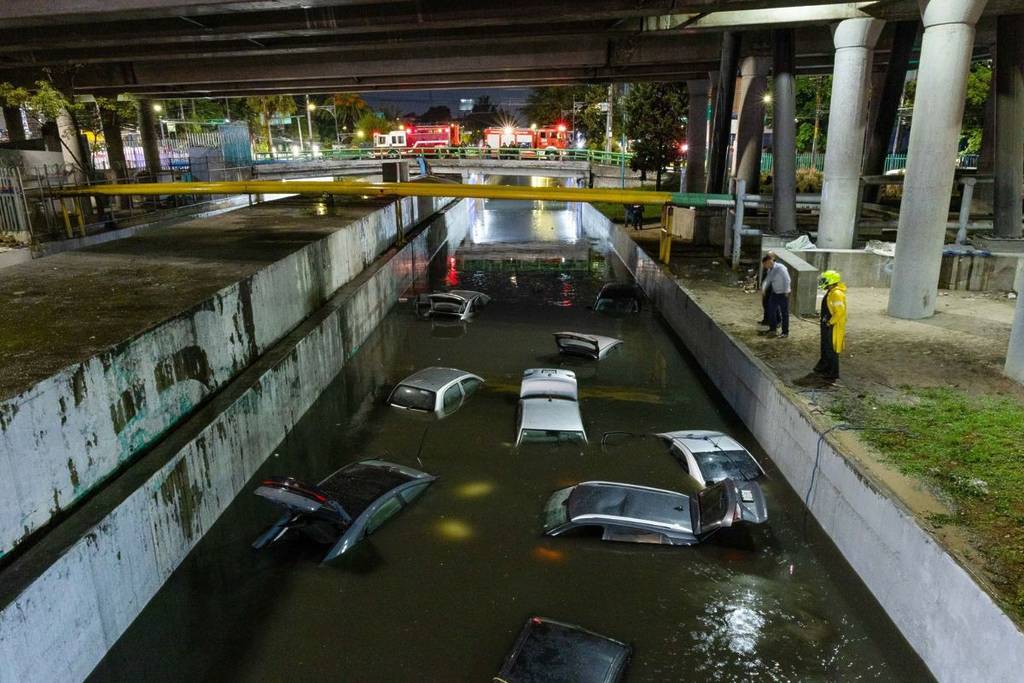

Watch out for the water! The Purple Alert indicates intense weather phenomena that rarely occur. When Mexico City authorities activate it, it’s best to take precautions and stay informed about Civil Protection recommendations. Here’s what this classification means.
The Classification of Alert Levels for Meteorological Phenomena is a chart with five levels that measure rain, wind, hail, high or low temperatures, as well as snowfall.
Each level has criteria that inform people about weather conditions to help prevent risks. Here is a breakdown of each:
🟢 The weather is average: rainfall is less than 15 mm/24h, wind speed is less than 49 km/h, there is no hail or snowfall, and the temperature is above 6 °C and below 30 °C.
🟡 Presence of light hydrometeors that may cause damage if associated with other circumstances: rainfall is 15 to 29 mm/24h, wind speed is 50 to 59 km/h, there is small hail and sleet, and the temperature is 4 to 6 °C or 30 to 32 °C.
🟠 Weather phenomena whose intensity can cause damage to fragile structures: rainfall is 30 to 49 mm/24h, wind speeds are 60 to 69 km/h, there is medium-sized hail, light snowfall, and the temperature is 1 to 3 °C or 33 to 35 °C.
🔴 Weather phenomena whose intensity causes damage: rainfall is 50 to 70 mm/24h, wind speeds are 70 to 79 km/h, there is large hail or snowfall, and temperatures range from -2 to 0 °C or from 36 to 38 °C.
🟣 Meteorological phenomena of rarely recorded intensity that cause serious damage: rainfall exceeds 70 mm/24h, wind speeds exceed 80 km/h, there is very large hail, heavy snowfall, and the temperature is at or below -3 °C or above 38 °C.
What kinds of risks are there during a Purple Alert?
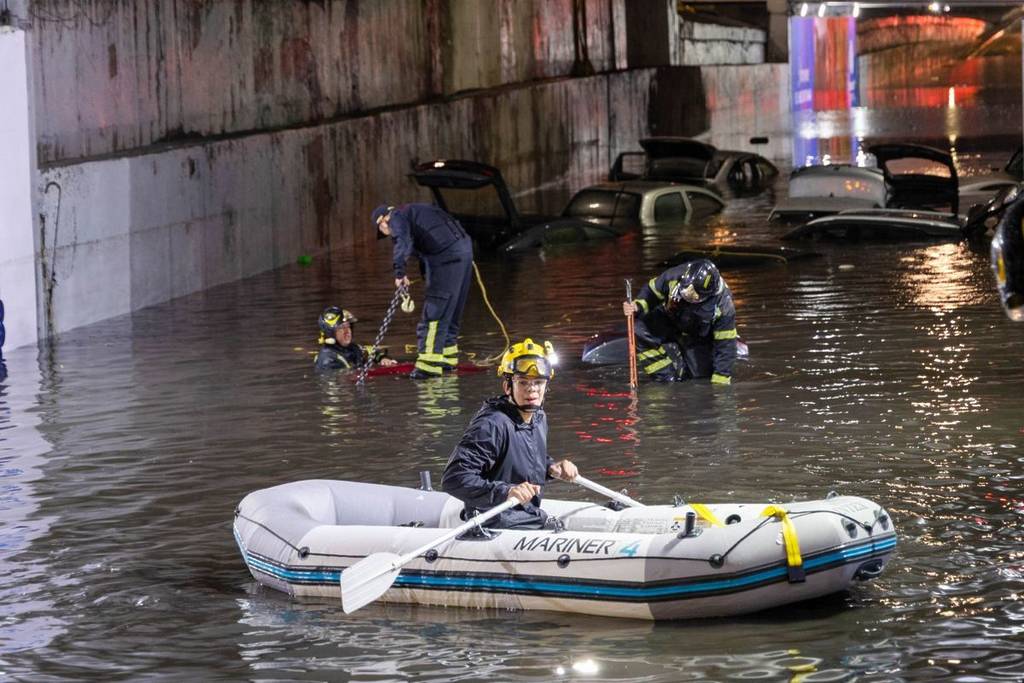
As you likely already know, on Monday, May 11, 2026, a Purple Alert was activated in Mexico City due to the intensity of the rainfall recorded, primarily in the boroughs of Cuajimalpa, Álvaro Obregón, La Magdalena Contreras, and Tlalpan.
The dangers that rain or torrential downpours can cause include: flooding, landslides, rivers that may overflow, falling trees, damage to homes, and strong water currents on the streets.
In these cases, the Secretariat of Comprehensive Risk Management and Civil Protection recommends that you stay in a safe place and, in the event of flooding or overflowing near you, store your important documents in plastic bags and unplug your electronic devices.
Also, you should avoid being near structures, trees, poles, power lines, etc. Are you facing a flooded road? Avoid crossing it!
If you need to report an emergency, you can call 911 or 55 5683 22 22.