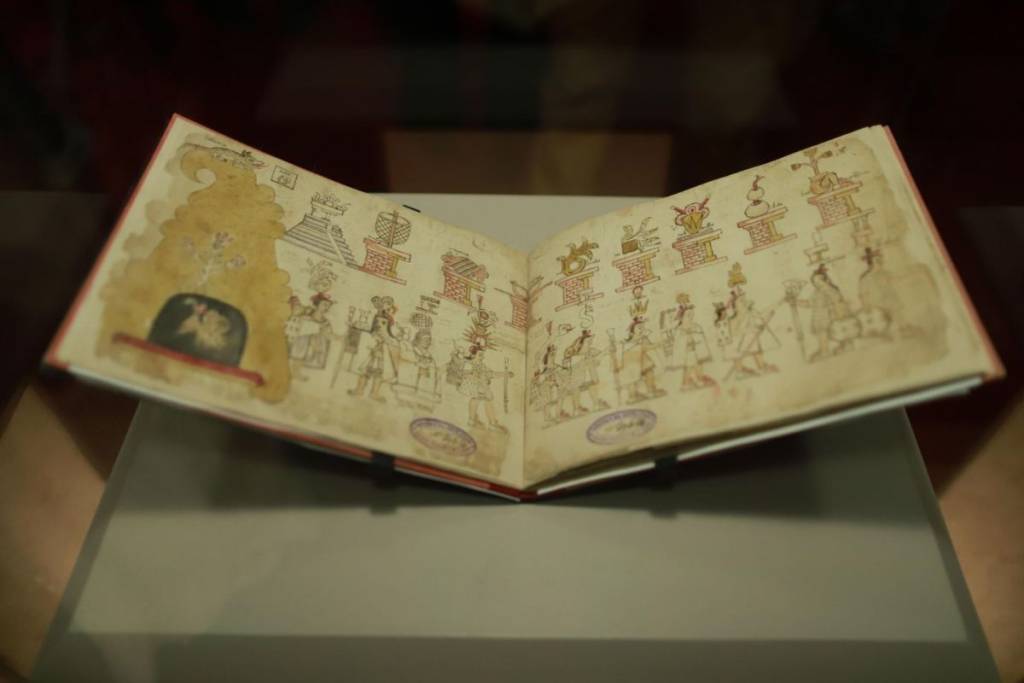

The return of the Azcatitlan Codex to the Museum of Anthropology is now a reality! Starting September 18, it will be on display for the first time since it left Mexico in the 1840s; this reunion is one of the most important cultural events of the year, and here’s everything you need to know.
The exhibition is part of the Great Franco-Mexican Festival, a program commemorating 200 years of diplomatic relations between France and Mexico. It is worth noting that while this priceless manuscript arrived in Mexico, the Codex Boturini traveled to Paris to be exhibited at the National Library of France.
But what makes this original manuscript from the late 16th and early 17th centuries so fascinating? Across its 20 folios, this pictographic document chronicles nearly 500 years of history through images and glyphs.
Its pages recount the Mexica people’s pilgrimage from Aztlán to the founding of Mexico-Tenochtitlan, depicting key events such as the encounter between Moctezuma Xocoyotzin and Hernán Cortés, as well as the early years of New Spain, political transformations, and evangelization.
According to the INAH, this document was taken to Paris in 1840 by the paleographer Joseph Marius Alexis Aubin, who intended to translate, study, and publish it. Some time later, the codex was sold to the philanthropist Eugène Goupil, and years later, his widow donated it to the National Library of France, located in Paris.
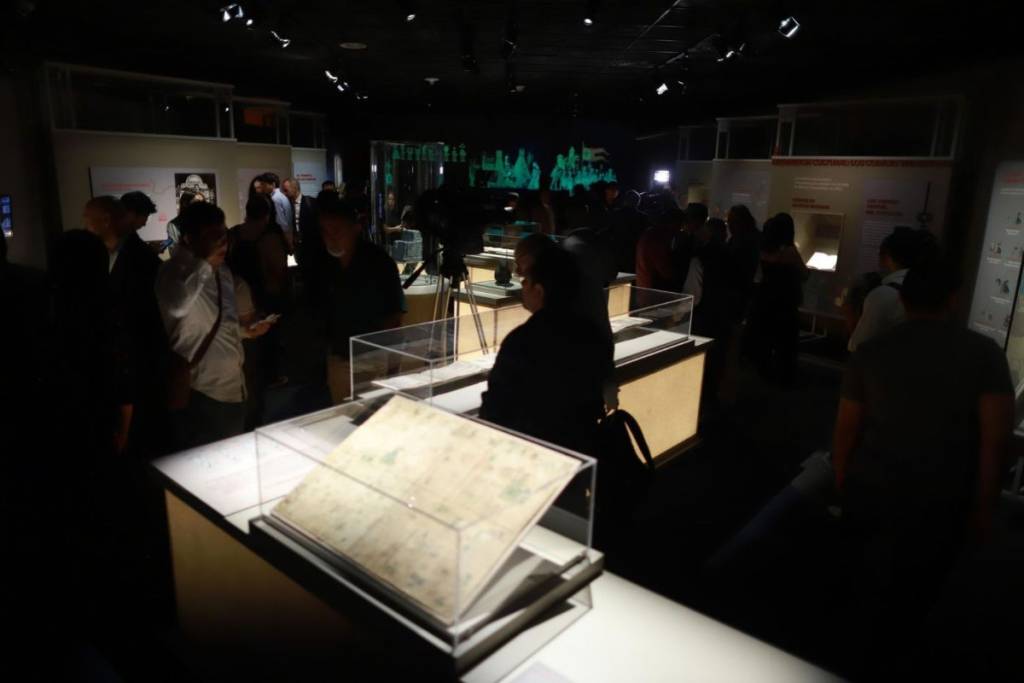
For several months, the exhibition will be on view in the MNAH’s Temporary Exhibition Hall; it is divided into six thematic sections and is complemented by 25 archaeological and ethnographic artifacts. You’ll be able to admire facsimiles of other historical manuscripts, codex-style vessels, stone pestles, and objects associated with the Mexica culture from the Late Postclassic period.
Don’t miss this opportunity, as the exhibition will be open only through December 6, 2026, and admission is free.
Come marvel at the Azcatitlan Codex at the Museum of Anthropology and connect firsthand with the profound social and cultural transformations that shaped our history.