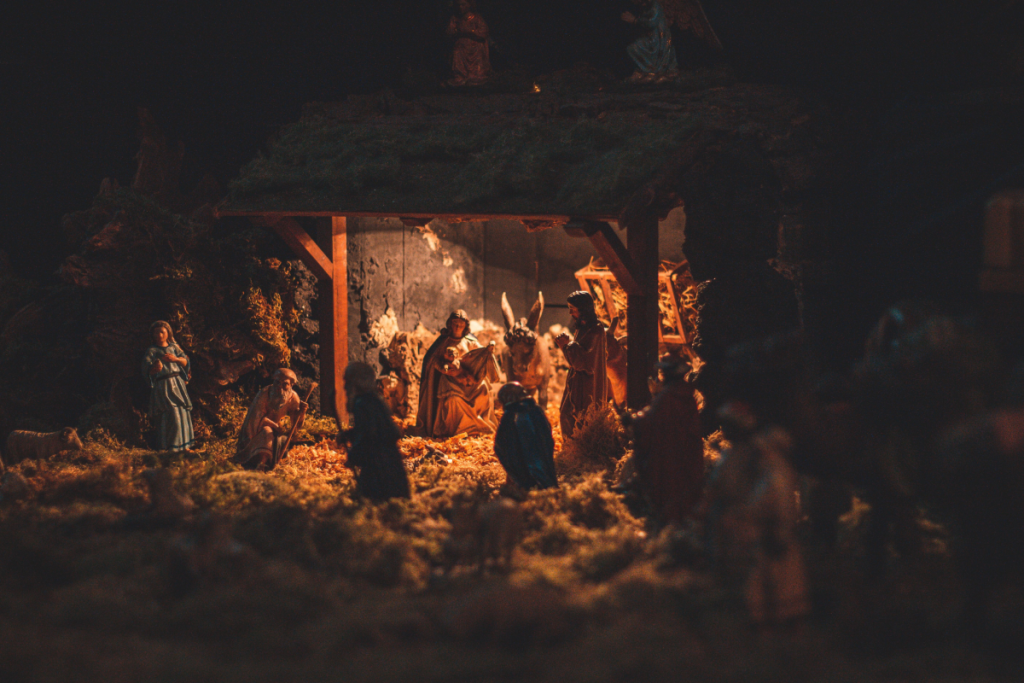

With the arrival of December, Christmas nativity scenes begin to appear in homes, markets, and public spaces throughout Mexico City. Among their traditional elements are moss and hay, two plants commonly used to recreate natural landscapes. But can you really be fined for having them at home?
Although warnings have circulated about fines exceeding two million pesos, having moss or hay in a Nativity scene does not, in and of itself, constitute an environmental violation. What is regulated, however, is their extraction, use, transportation, and sale.
What does the law say about moss and hay at Christmas?
NOM-011-SEMARNAT-1996 establishes procedures and criteria for the harvesting, transportation, and storage of moss, hay, and doradilla—forest resources that play important roles in ecosystems.
Therefore, environmental authorities can penalize activities that violate the relevant provisions, especially when resources are extracted from forests without the required documentation or authorization.
Fines depend on the violation and the applicable legal provisions. Although figures in the millions have been reported, there is no automatic fine for placing these plants in a home nativity scene.
In Mexico City, where Christmas markets and seasonal stalls offer various decorative materials, it’s important to distinguish between purchasing legally sourced products and encouraging illegal harvesting.
How can you tell if the moss and hay you buy are legal?
If you find moss or hay at Christmas markets in Mexico City, the first thing to do is ask where it comes from. Just because it’s for sale at a registered stall doesn’t necessarily mean it was harvested legally.
According to forestry legislation, the use of these resources must comply with the relevant requirements, and their origin can be verified through documentation such as forestry permits, shipping documents, or tax receipts that meet the legal requirements.
As a buyer, you can ask who the supplier is, request information about the plants’ origin, and ask for a receipt. A receipt alone does not guarantee that the product is legal, but it can help you identify the seller.
If the seller does not know the source or cannot provide information to support it, the safest option is to choose another product.
Why do they recommend avoiding illegally harvested moss and hay?
Moss helps retain soil moisture and helps protect the soil from erosion. Hay, for its part, is part of forest ecosystems and provides habitats for small organisms.
Uncontrolled harvesting can affect the environmental balance, especially when done in large quantities during the holiday season.
To decorate a nativity scene, there are alternatives such as reused paper, fabric, recycled materials, or artificial elements that can last for several years.
The recommendation is to avoid buying moss and hay from unknown sources, without assuming that all sales of these materials are prohibited.
Thus, the tradition of setting up a Nativity scene can be maintained without contributing to practices that harm forests. The key is knowing the origin of the materials and the environmental regulations governing their use.