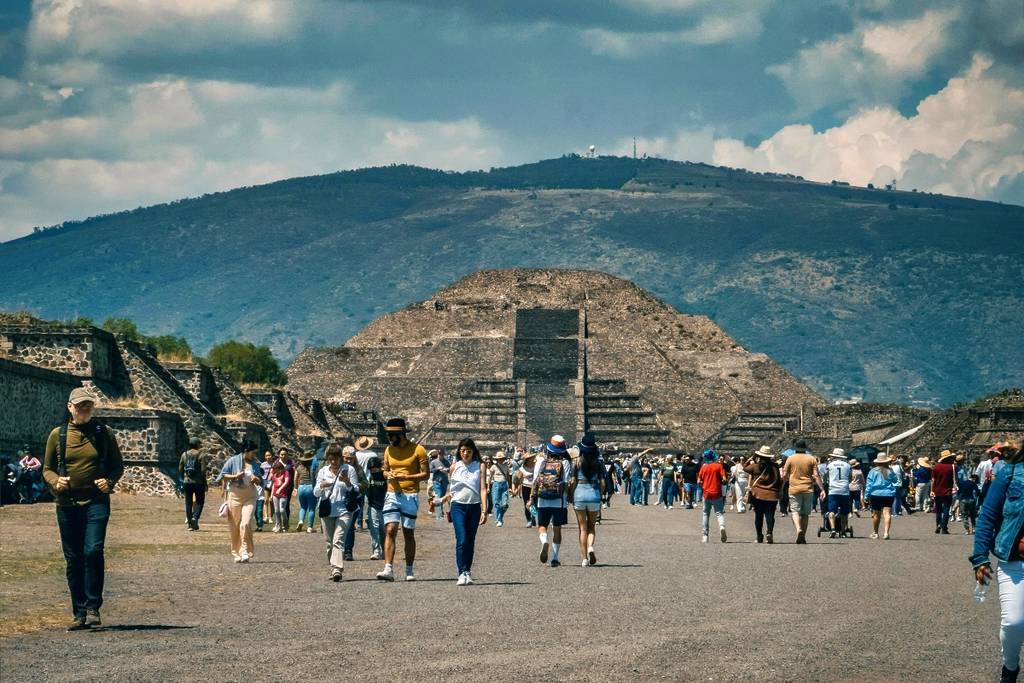

Visiting Teotihuacan will never be the same. The Archaeological Zone will debut a new digital experience that will allow each visitor to create their own tour among pyramids, murals, and pre-Hispanic ruins. Yes, something like a “choose your own adventure,” but at one of Mexico’s most important historical sites.
The tool will launch alongside Grandeza Teotihuacana, the new museum at the archaeological complex set to open ahead of the 2026 World Cup, which will feature unique historical artifacts, such as an original ball dating back 3,500 years.
Here’s how Teotihuacán’s new digital tour will work

The new app will allow you to customize your visit based on your interests and schedule. In other words, you’ll be able to choose which areas you want to explore, how much time you’ll spend there, and what kind of experience you’re looking for—whether it’s a family outing, a school trip, or a tour focused on the site’s history and archaeology.
With this technology, Teotihuacan will become the first archaeological site in the country to offer a personalized digital tour. The goal is for visitors to no longer have to improvise upon arrival or rely entirely on a guide to organize their experience.
According to the Secretary of Culture, Claudia Curiel de Icaza, the platform will include maps and complete itineraries to facilitate the tour even before entering the archaeological site.
The new Grandeza Teotihuacana museum will open before the World Cup

In addition to the digital experience, Teotihuacan will debut the Grandeza Teotihuacana museum, which will join the Cultura Teotihuacana and Murales Teotihuacanos spaces. The archaeological complex received an investment of over 37 million pesos to rehabilitate access points, improve signage, and renovate various areas.
INAH officials estimate that during the 2026 World Cup, visitor numbers will increase by up to 35%, so this renovation aims to make Teotihuacan a must-see destination for both domestic and international tourists.
Although not all details of the museum have been revealed yet, it has already been confirmed that one of the most striking artifacts will be a 3,500-year-old pre-Hispanic ball.