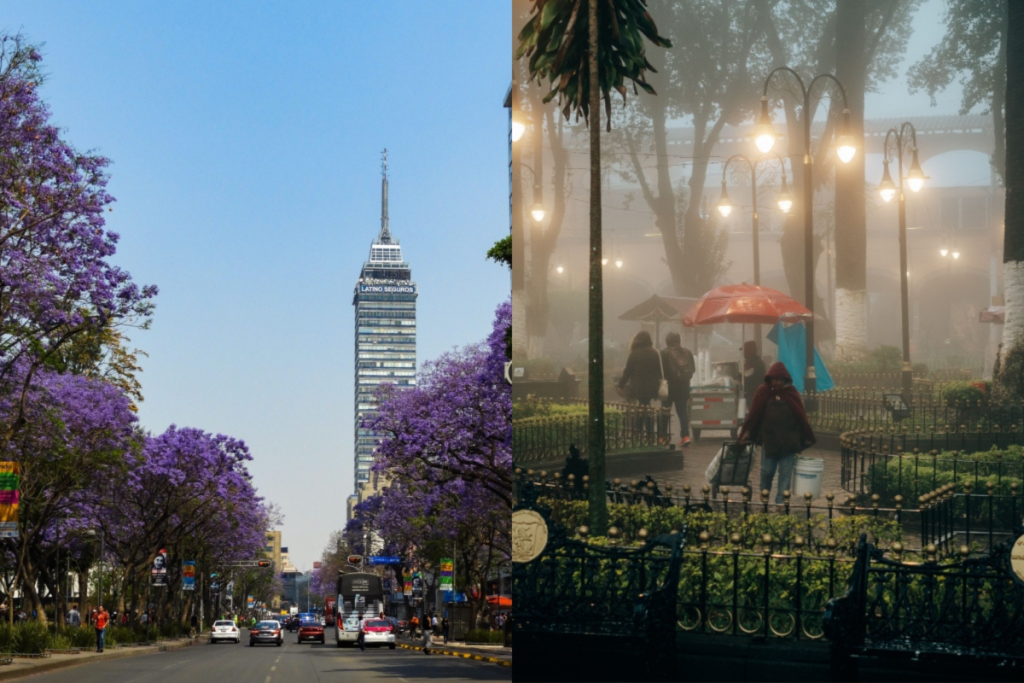

Have you ever left home wearing a jacket because it was freezing, only to find that once you reached downtown Mexico City, you no longer needed it? Although it may seem strange, there can be a temperature difference of up to 10 degrees in some areas of Mexico City, according to research by UNAM.
Now that the cool October mornings are starting to set in, this fact is particularly intriguing. The cold doesn’t affect the entire city in the same way.
According to researcher Elda Luyando López of UNAM’s Center for Atmospheric Sciences, these differences are related to a phenomenon known as the urban heat island effect.
Where is it coldest in Mexico City?
In a publication by Ciencia UNAM, the specialist explained that on some mornings in March, temperature differences of up to 10 °C have been observed between the Historic Center and rural areas of the capital.
To illustrate this, the university offers an example: while the thermometer in Xochimilco might read 6 °C at six in the morning, it could register 16 °C in the city center.
This doesn’t mean that both areas always have that difference, but rather that environmental conditions can create significant contrasts.
Vegetation, humidity, elevation, and the density of buildings all influence the temperature in each location.
That’s why rural areas and those with more vegetation can feel considerably colder than densely urbanized areas.
What are heat islands, and why do they influence the cold in Mexico City?

According to a study published in Gaceta UNAM, concrete, asphalt, and buildings absorb heat during the day and alter the city’s temperatures.
This phenomenon causes some urban areas to be warmer than their surroundings, especially during the early hours of the morning.
Elda Luyando points out that the Historic Center, having less vegetation and bodies of water, can behave thermally like a desert area.
In contrast, areas with trees and vegetation help regulate the temperature through shade and water evaporation.
So, when a particularly cold morning hits Mexico City, remember that where you are can make a big difference in what the thermometer reads.