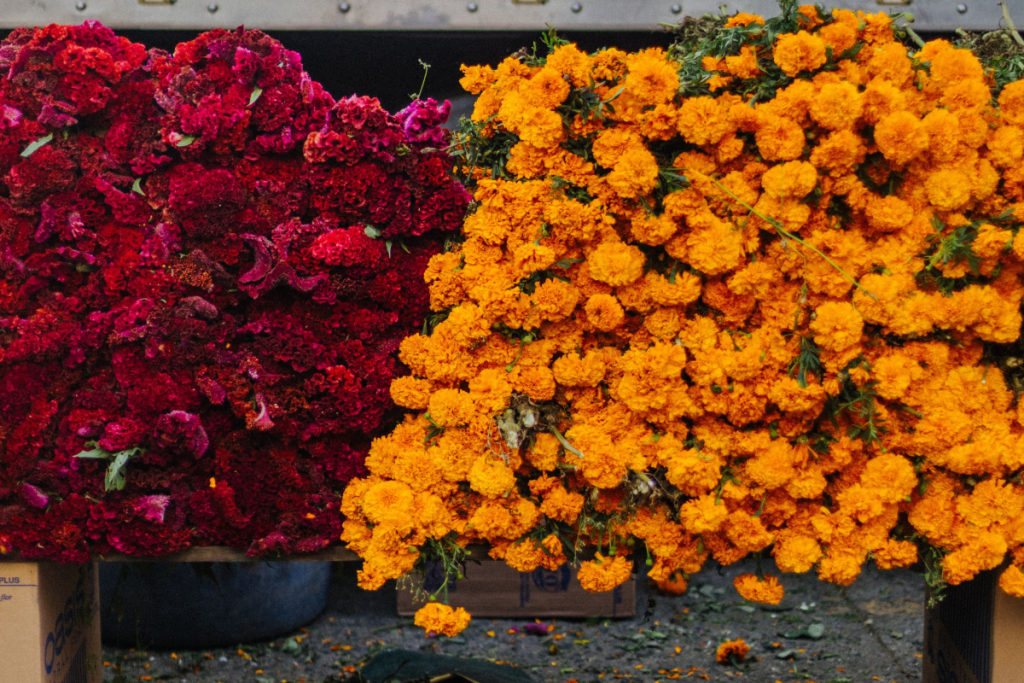

Have you already taken down your Day of the Dead offering and don’t know what to do with the flowers? Don’t throw them away! Your cempasúchil can still have a second life. The Secretariat of the Environment (SEDEMA) has set up various cempasúchil collection centers in Mexico City, where the flowers will be used to make compost.
Collection began on November 3, 2026, and will be available throughout the month at four Environmental Culture Centers. There will also be special events at the Barter Market and another collection point in the San Juan de Aragón Forest.
Where are the cempasúchil collection centers in Mexico City?
The four Environmental Culture Centers will accept flowers from 10:00 a.m. to 4:00 p.m. throughout November. Here are their locations:
- CCA Yautlica: Avenida de las Torres (no number), Colonia Ampliación Emiliano Zapata, Iztapalapa.
- CCA Ecoguardas: Picacho-Ajusco Highway, kilometer 5.5, Ampliación Miguel Hidalgo neighborhood, Tlalpan.
- CCA Acuexcomatl: 1900 Año de Juárez Avenue, Quirino Mendoza neighborhood, San Luis Tlaxialtemalco, Xochimilco.
- CCA Chapultepec: Avenida de los Compositores, Second Section of Chapultepec Forest, Miguel Hidalgo.
Another option is the Educational Garden in the San Juan de Aragón Forest, accessible through Gate 7. It will accept flowers through November 30, from 10:00 a.m. to 4:00 p.m.
You can also bring your flowers to the Barter Market
If you’d rather take advantage of the weekend, SEDEMA has announced two special days for cempasúchil drop-offs:
- November 8: San Juan de Aragón Forest, from 8:00 a.m. to 1:00 p.m.
- November 22: Tlatelolco Sundial, from 8:00 a.m. to 1:00 p.m.
And what happens to the collected flowers? They can be turned into compost to return nutrients to the soil. Additionally, this initiative aims to recover seeds and reuse plastic pots, preventing these materials from ending up in household waste.
You can also reuse your cempasúchil at home: let the flower heads dry, remove the seeds, and store them in a dry place for future planting. Another option is to use the petals as a natural dye.
In this way, the flowers that adorned the offerings can continue to be put to good use after the celebrations, while promoting more environmentally responsible practices.